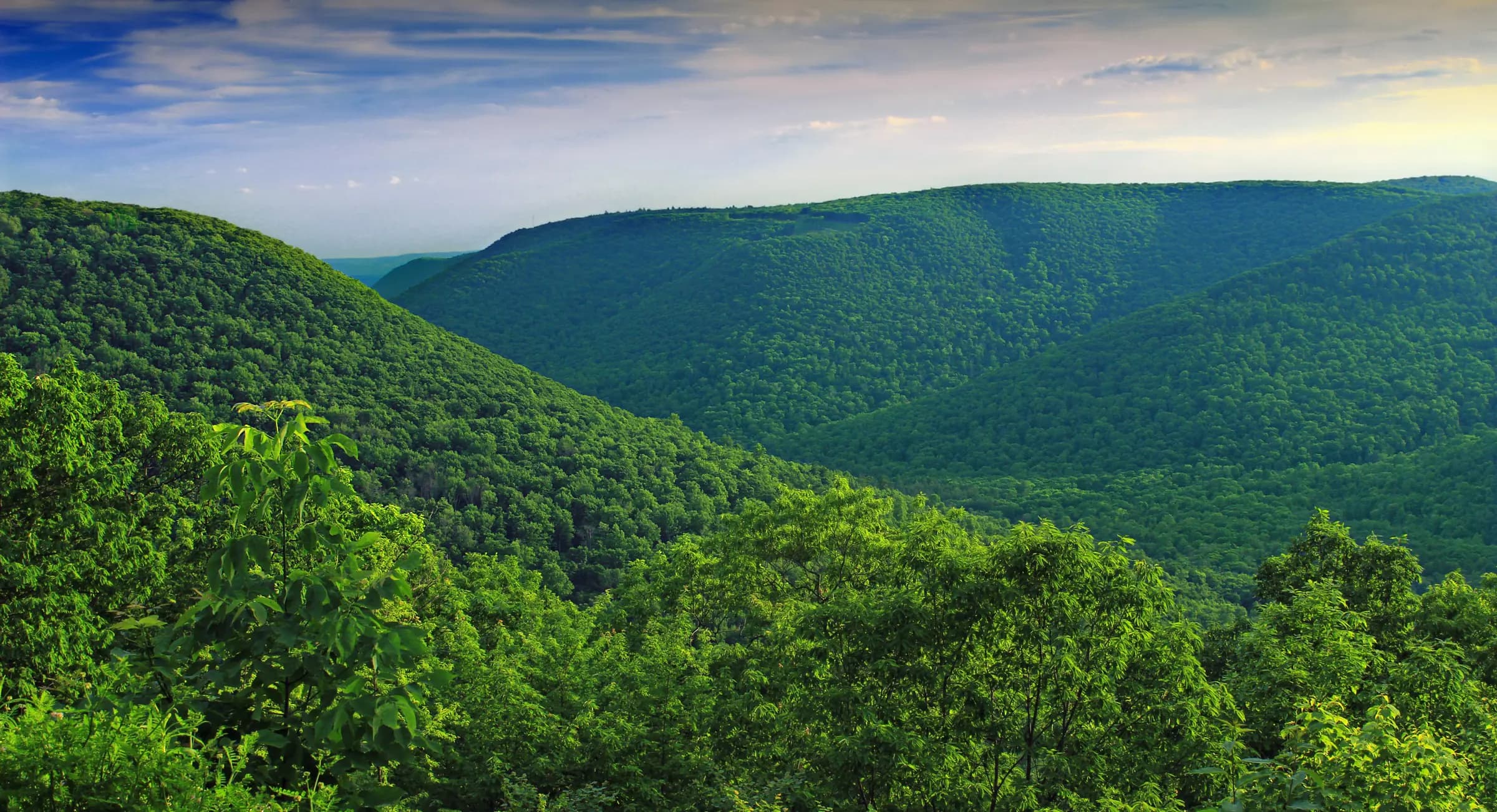
Now searching Pennsylvania and Virginia
Chestly
Finding America’s lost chestnuts.
Chestly uses satellite imagery, environmental data and machine learning to prioritise places where undocumented American chestnut trees may survive — then sends people to look.
- experimental candidates
- 49experimental candidates
- states searched
- 2states searched
- known observations
- 4,801known observations
Current search
Pennsylvania and Virginia
Latest model chestly_general v1.0
Known observations
4,801
Documented American chestnut records sourced from iNaturalist.
Experimental candidates
49
Candidate search areas ranked by model support. Not identified trees.
Regions searched
2 of 6
Evaluated states where the model cleared its validation gate.
Field verified
0
Confirmed in person. The only number that finally counts.
Regions
A state is searched only after the model clears a fixed validation gate there.
PAPennsylvania
LiveHome region of the deployed model; spatially validated and searched statewide.
24 candidatesVAVirginia
LivePassed the transfer validation gate; searched statewide.
25 candidatesTransfer ROC-AUC 0.805WVWest Virginia
GatedThe Pennsylvania model does not yet meet the deployment gate here (probability calibration failed on held-out sites). No candidates are published for this state.
No candidates publishedTransfer ROC-AUC 0.768MDMaryland
GatedThe Pennsylvania model does not yet meet the deployment gate here (probability calibration failed on held-out sites). No candidates are published for this state.
No candidates publishedTransfer ROC-AUC 0.779NYNew York
GatedThe Pennsylvania model does not yet meet the deployment gate here (ranking accuracy below the deployment gate; too little lift over the base rate; top-of-ranking precision below the gate; probability calibration failed on held-out sites). No candidates are published for this state.
No candidates publishedTransfer ROC-AUC 0.662OHOhio
GatedThe Pennsylvania model does not yet meet the deployment gate here (ranking accuracy below the deployment gate; too little lift over the base rate; probability calibration failed on held-out sites). No candidates are published for this state.
No candidates publishedTransfer ROC-AUC 0.671
How Chestly works
Narrowing a forest to places worth walking into
No satellite can identify a species of tree from orbit. What one can do is measure how a patch of canopy behaves across a year, and find where that behaviour resembles the places chestnuts are known to survive. The output is a search list, not an identification.
01
Known observations
Confirmed records of surviving American chestnuts anchor the search — each one a labelled example of what the forest looks like where a chestnut stands.
02
Satellite + terrain signals
Seasonal Sentinel-2 composites, elevation, slope and aspect. What separates species is often when a canopy changes, not how it looks on one August afternoon.
03
Candidate ranking
A model combines the signals and ranks locations by how worthwhile they are to investigate — favouring ground far from trees already on record.
04
Field verification
Somebody walks to it and looks. Nothing here is confirmed from a screen, and the metric that matters is chestnuts found per trip taken.
The problem
A forest lost its most important tree
~4 billion
trees lost to blight
~50 years
from first report
The American chestnut, Castanea dentata, once dominated the eastern forest canopy. An introduced blight, identified in 1904, killed an estimated four billion of them within about fifty years.
The species is not extinct. The blight kills the trunk but usually not the root system, so chestnut sprouts persist across the Appalachians, typically dying back before they can reproduce. What matters are the rare survivors: mature, flowering trees that have escaped or resisted the blight long enough to set seed.
Those trees are the genetic foundation of any restoration effort. Some are documented. Many, almost certainly, are not — standing somewhere in millions of hectares of forest that nobody has walked through with a reason to look up.
Somewhere in these forests, American chestnuts are still surviving.
We’re trying to find them.